Hip arthritis
Hip Arthritis Treatment Options.
Hip arthritis is common and usually treatable. The right answer for you depends on how it is affecting your life, what imaging shows, and what you have already tried. A private consultation with the team led by Professor Paul Lee gives you a clear plan, surgical or otherwise.
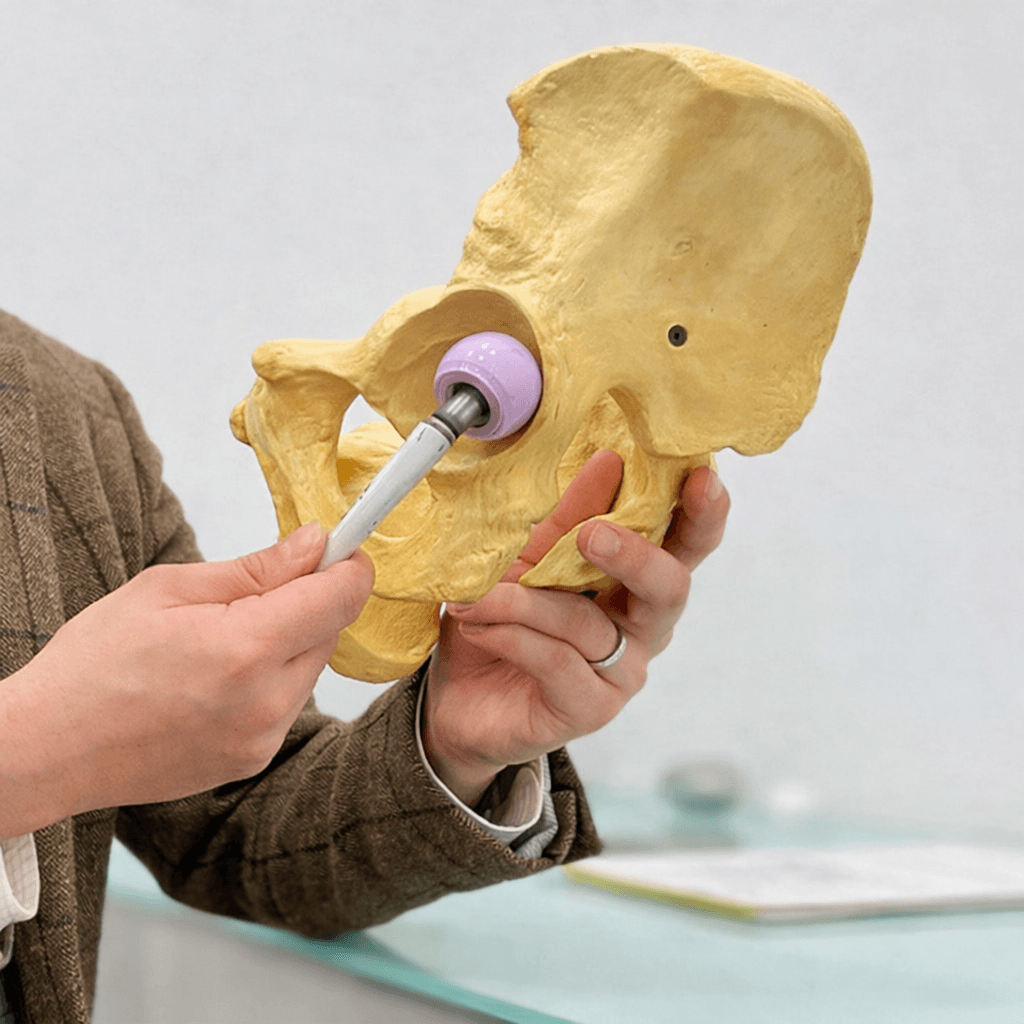
Symptoms of hip arthritis
What hip arthritis often feels like.
Hip arthritis tends to come on gradually. People rarely arrive at a consultation with a single dramatic episode but a list of small things that have crept up over months or years.
Groin or hip pain
Persistent pain in the groin, side of the hip or front of the thigh that does not settle with rest.
Night pain
Hip pain that wakes you at night or makes it hard to lie comfortably on the affected side.
Stairs and chairs
Difficulty climbing stairs, rising from a low chair or getting out of a car.
Reduced walking distance
A shrinking comfortable walking distance or a noticeable limp on longer walks.
Stiffness in the morning
Early-morning hip stiffness, or stiffness after sitting that takes time to ease off.
Quality of life affected
Sleep, mood, work or activities you enjoy are being limited by your hip.
Symptoms alone do not confirm hip arthritis. Other conditions, including groin or back issues, can mimic it. Examination and imaging are how the diagnosis is confirmed.
When to seek specialist assessment
Most people wait too long.
Pain has a way of becoming the new normal. By the time some patients reach a consultation they have been gradually doing less for a long time without noticing. There is no medal for putting up with it.
Book a consultation- Hip pain that is affecting sleep or work
- A noticeable drop in your comfortable walking distance
- Pain that has not settled with simple measures over weeks
- Stiffness that limits dressing, putting on shoes or getting in and out of a car
- Pain that is gradually getting worse over months
- Previous imaging suggesting arthritic change
Non-surgical options
Surgery is rarely the first conversation we have.
Activity & load
Pacing, simple gait changes and choosing the right exercise can take pressure off the joint.
Targeted physiotherapy
A structured plan strengthens the muscles around the hip and improves how it moves.
Weight management
Even modest reductions in load travel through the hip thousands of times a day. It adds up.
Selected injections
Image-guided injections can give time-limited relief and help confirm the joint as the pain source.
Non-surgical measures are not curative for advanced arthritis. They can buy useful time, confirm the diagnosis and improve quality of life.
When hip replacement may be considered
When the joint, your imaging and your life all point the same way.
Hip replacement is typically considered when arthritis is structurally confirmed on imaging, when symptoms have stopped responding to non-surgical care, and when your life is being limited in ways that matter to you. The decision is yours; our job is to give you the clearest possible picture so you can make it.
FAQs
Frequently asked questions
What are the symptoms of hip arthritis?
Can hip arthritis be treated without surgery?
When is hip replacement considered?
Can hip arthritis cause groin or thigh pain?
What should I bring to my consultation?
Get a clear plan
Book a consultation.
A focused appointment with Professor Paul Lee to confirm the diagnosis, talk through your options and decide together what is sensible next.
Clinical lead: Professor Paul Lee, Consultant Orthopaedic Surgeon. Suitability is assessed during consultation; all surgery carries risks.